Following the demise of Kasturba Gandhi in Aga Khan Palace, Pune in 1944, Mahatma Gandhi initiated a national fund to commemorate her memory. He envisioned an organization dedicated exclusively to the welfare and upliftment of rural women and children. This led to the birth of the Kasturba Gandhi National Memorial Trust in 1945.
Gandhiji himself served as the first Chairman of the Trust. He shifted its headquarters to Kasturbagram, Indore, in a rural environment, emphasizing that the soul of the organization must reside where the people it serves live.
"The main object of the Trust has been to serve the women and children in the villages of India. That service can only be rendered through rural women trained for the purpose." — Mahatma Gandhi
To create a just and equitable society where rural women are self-reliant, educated, and healthy, leading their families and communities towards progress with dignity and peace, in alignment with Gandhian values.
To work primarily in rural areas for the welfare, education, healthcare, and livelihood training of women and children, developing local sister-workers (Gram Sevikas) to spearhead localized community-driven changes.
We implement specialized programs across India, focusing on integrated rural development.
We run Balwadis (non-formal nurseries), primary schools, residential schools for girls, and adult literacy drives. We place special emphasis on computer training and digital tools, ensuring rural girls are prepared for the modern workforce.
Our healthcare centers and mobile clinics bring primary healthcare to villages. Programs cover immunization, nutrition counselling for pregnant mothers, hygiene workshops, and clean drinking water initiatives.
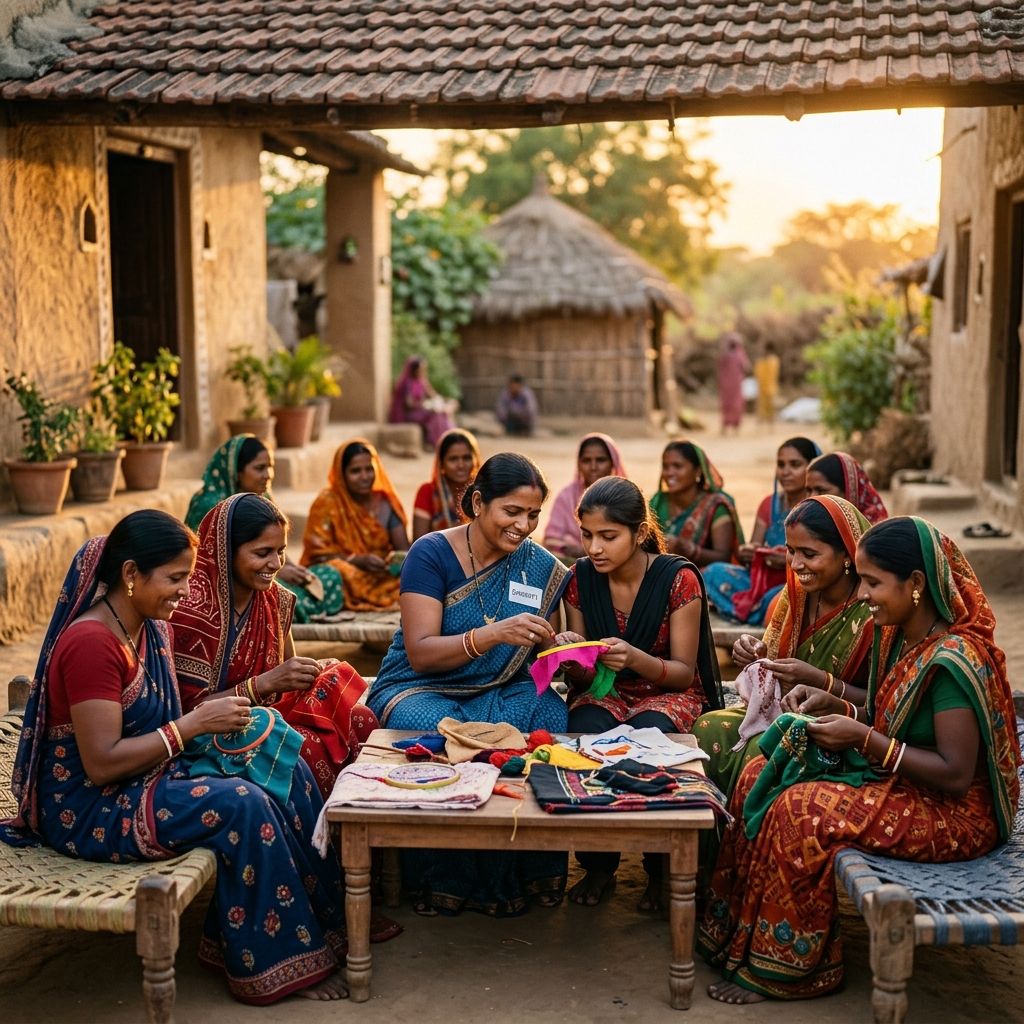
Through skill training centers, we teach sewing, block printing, organic compost production, food processing, and handicrafts. We facilitate the creation of women's Self-Help Groups (SHGs) to run micro-enterprises.
At our Kasturbagram Krishi Kshetra and training units, we promote organic farming, compost-making, seed preservation, and solar energy options to build climate resilience among rural farmers.
A look back at over seven decades of empowering rural India.
A national appeal by Gandhiji raised over 1.3 crore rupees from citizens to establish a trust dedicated to the service of village women and children.
The Trust was officially registered. Mahatma Gandhi became its first Chairman, establishing guidelines that all workers must reside in rural areas.
The first batch of rural social workers (Gram Sevikas) began training under Gandhiji's guidance to lead educational and health programs in their respective home states.
Headquarters moved permanently to Kasturbagram, Indore, on 400 acres of rural land to run agricultural training, hospitals, and model community services.
KGNMT has expanded to operate provincial branches across 22 states in India, running over 500 rural centers and touching millions of lives.